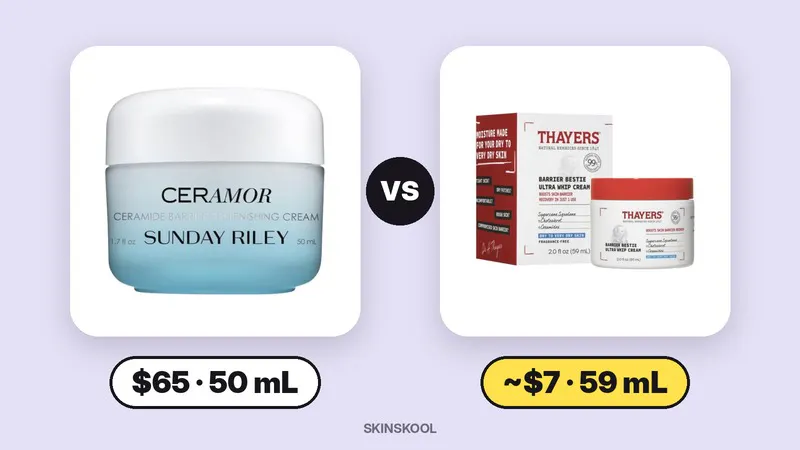
Barrier creams are having a moment. SkinCeuticals Triple Lipid Restore is one of the most searched products on our site right now, and the category keeps getting more crowded. So when Sunday Riley launched Ceramor Ceramide Barrier Replenishing Cream this week at $65 for 50 mL, we wanted to see what was inside. Sunday Riley has earned a loyal following for formulas that do what they say, and Ceramor’s pitch is a strong one: skin-identical ceramides, essential barrier lipids and what the brand calls a “30%+ cholesterol complex.”
We ran it through our database of more than 67,000 ingredient lists the day it was added. The top matches were mostly drugstore brands, all scoring 9 out of 10. One of them, Thayers Barrier Bestie Ultra Whip Face Cream, stood out for a reason we didn’t expect. It lists the ingredient Ceramor’s label doesn’t.
Key Takeaways
- Both creams are fragrance-free ceramide moisturizers built around squalane, Ceramide NP and a jojoba ingredient. Thayers scored 9 out of 10 for ingredient similarity in our database.
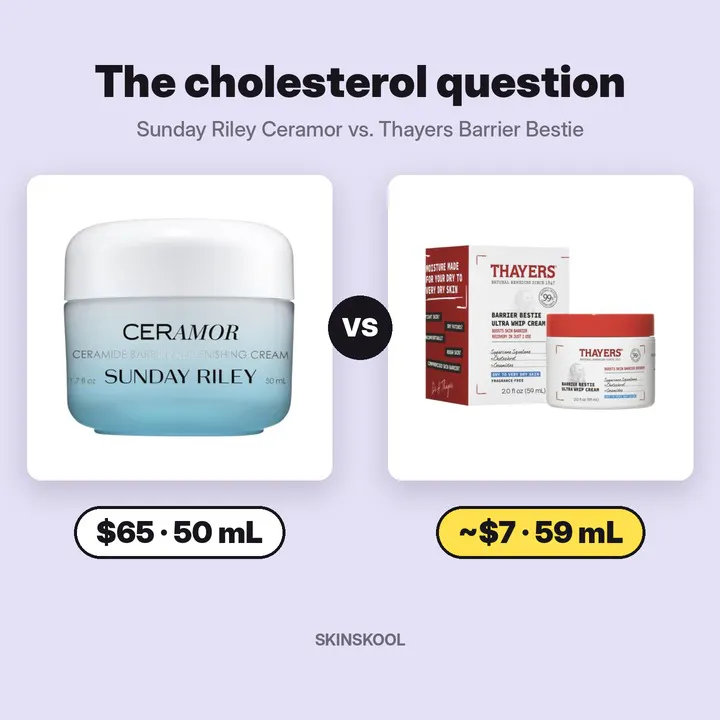
- Ceramor is $65 for 50 mL ($1.30/mL). Thayers has been selling for around $7 to $8 for 59 mL (about $0.13/mL), roughly a tenth of the price per mL.
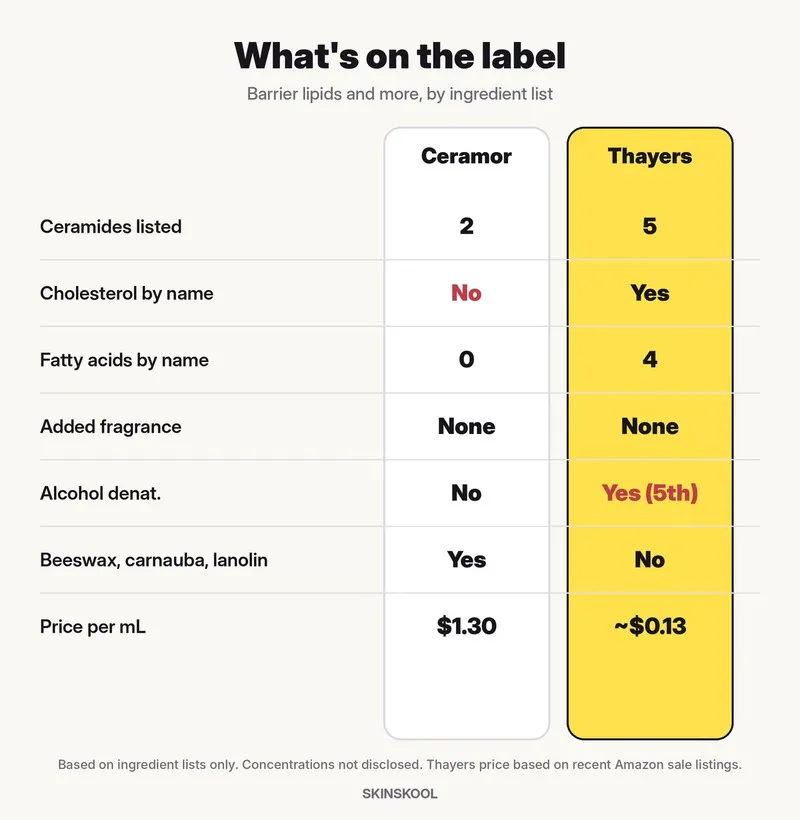
- Ceramor advertises a 30%+ cholesterol complex, but cholesterol doesn’t appear on its ingredient list. Thayers lists cholesterol by name, plus five ceramides and four fatty acids.
- Ceramor has beeswax, carnauba wax and lanolin that Thayers doesn’t, which likely means a richer texture. Thayers lists alcohol fairly high up, which some dry or sensitive skin types prefer to avoid.
The Cholesterol Question
Cholesterol matters in a barrier cream. Along with ceramides and fatty acids, it’s one of the lipids the skin barrier is actually made of, and it’s the headline claim on Ceramor’s product page.
So we went looking for it on the label, and it isn’t there by name.
What we did find is lanolin alcohol, tenth on the list. Lanolin alcohol comes from wool and is naturally rich in cholesterol, so that appears to be where the “complex” comes from. The claim seems plausible. You just can’t verify it from the ingredient list, and the brand doesn’t say what the 30% refers to. That’s not unusual in skincare, but if you’re the type who reads labels before buying, it’s good to know what you’re looking at.
What They Share
Squalane. It’s the second ingredient in Ceramor and appears in Thayers as well. Squalane is a lightweight emollient that softens skin and helps reduce moisture loss without feeling greasy.
Ceramide NP. Both formulas include this skin-identical ceramide, one of the most common types found naturally in the skin barrier.
Jojoba. Ceramor uses jojoba seed oil and Thayers uses hydrogenated jojoba oil. They’re related, though not identical, since hydrogenation changes the texture.
No added fragrance. Neither cream lists fragrance, which matters for anyone reaching for a barrier cream because their skin is already unhappy.
Both also share the usual supporting cast: glycerin, caprylic/capric triglyceride, tocopherol and ascorbyl palmitate.
Where Thayers Goes Further
Five ceramides. Ceramor lists two (NG and NP). Thayers lists five: AP, EOP, EOS, NP and NS. A wider spread of ceramide types more closely resembles the mix found in skin, though ingredient lists don’t tell us how much of each is present.
Cholesterol, by name. It’s right there in the list, between myristic acid and palmitic acid.
Fatty acids. Thayers lists four: stearic, behenic, myristic and palmitic acid. Ceramides, cholesterol and fatty acids together are the trio most barrier creams build their marketing around. Interestingly, even SkinCeuticals Triple Lipid Restore 2:4:2, which is named after that ratio, doesn’t list a fatty acid by name on its label. Thayers names all three groups.
(If you want to try it, Thayers Barrier Bestie is here. We don’t have a code on this one. The price did most of the work already.)
What Ceramor Offers
Ceramor has real strengths, and they’re the kind that show up in how a cream feels rather than in a feature list.
Beeswax and carnauba wax. Neither appears in Thayers. Waxes generally create a more cushiony, occlusive finish, which fits the “plush” texture Sunday Riley describes.
Lanolin alcohol. Beyond the cholesterol story, lanolin is a well-known emollient for very dry skin. It’s worth knowing that this also means Ceramor isn’t vegan, and some people find lanolin irritating.
Castor, jojoba and sunflower seed oils. These give Ceramor a richer oil base than Thayers.
No drying alcohol. Thayers lists alcohol denat. fifth. It’s often used to make a cream feel lighter and absorb faster, but some very dry or sensitive skin types prefer to skip it. Ceramor doesn’t contain it. Thayers also has a trace of salicylic acid near the end of its list.
A shorter list. Ceramor has 30 ingredients to Thayers’ 39. For some people, fewer ingredients is a reason on its own.
And there’s the brand itself. If Sunday Riley products have worked for your skin before, that history counts for something an ingredient list can’t capture.
The Price
Ceramor is $65 for 50 mL, which works out to $1.30 per mL.
Thayers Barrier Bestie is a 59 mL jar that has recently been selling for around $7 to $8 on Amazon. At $7.60, that’s about $0.13 per mL.
Put them side by side at the same 50 mL, and Thayers comes to about $6.44. That’s nearly $59 more for the Ceramor jar. For a moisturizer you might go through every month or two, that’s a lot of money left on the table, especially when the cheaper option lists more of the lipids the expensive one advertises.
If you’ve been waiting for a reason to try a ceramide cream without committing to a luxury price, Thayers Barrier Bestie is an easy one to test.
The Bottom Line
Based on ingredient lists alone, Thayers Barrier Bestie appears to cover more of the barrier lipid story than Ceramor does. It has more ceramide types, cholesterol by name and four fatty acids, at roughly a tenth of the price per mL.
But ingredient lists don’t tell the whole story. We don’t know the concentrations in either formula, and texture, stability and how a cream is made all affect how it performs on your skin. Ceramor’s waxes and lanolin will likely make it feel richer, and it skips the alcohol that some dry skin types avoid. If you love the feel of a plush cream, or Sunday Riley has worked for you before, those are real reasons to choose it.
If you mostly care about what’s on the label, Thayers makes a strong case for itself.
How to Use
Apply either cream as the last step of your evening routine, or in the morning under sunscreen. If your barrier is feeling compromised, keep the rest of your routine simple for a couple of weeks and hold off on strong exfoliants or retinoids while you see how your skin responds.
Patch test first, especially with Thayers if you know your skin doesn’t get along with alcohol, or with Ceramor if you’re sensitive to lanolin.
Find Thayers Barrier Bestie here.
FAQ
Is there a dupe for Sunday Riley Ceramor?
Based on ingredient lists, Thayers Barrier Bestie Ultra Whip Face Cream is one of the closest affordable matches, scoring 9 out of 10 in our database. Both are fragrance-free ceramide creams with squalane, Ceramide NP and jojoba. Thayers lists more ceramide types plus cholesterol and fatty acids. Concentrations aren’t disclosed for either, so results may differ.
Does Sunday Riley Ceramor contain cholesterol?
Cholesterol isn’t listed by name on Ceramor’s ingredient list. The brand advertises a 30%+ cholesterol complex, and the formula contains lanolin alcohol, which is naturally rich in cholesterol. That appears to be the likely source, but the label doesn’t confirm it.
Is Ceramor fragrance-free?
Ceramor’s ingredient list doesn’t include added fragrance.
Does Thayers Barrier Bestie contain alcohol?
Yes. Alcohol denat. is the fifth ingredient. Some people with very dry or sensitive skin prefer to avoid it, so patch testing is a good idea.
How does Ceramor compare to SkinCeuticals Triple Lipid Restore 2:4:2?
They appear to be built quite differently. Triple Lipid Restore is silicone-based (dimethicone is its second ingredient), lists cholesterol high in the formula, and contains lavender, rosemary and peppermint oils. Ceramor has an oil and squalane base with no added fragrance. Thayers didn’t come up as a close match for Triple Lipid Restore in our database.
Is there a UK alternative to Ceramor?
Revolution x Sali Hughes Cream Drench Rich Anytime Moisturiser is £14 for 50 mL at Boots and scored 9 out of 10. It shares shea butter ethyl esters, castor oil, sunflower oil and squalane with Ceramor and lists cholesterol by name. It does contain added fragrance.