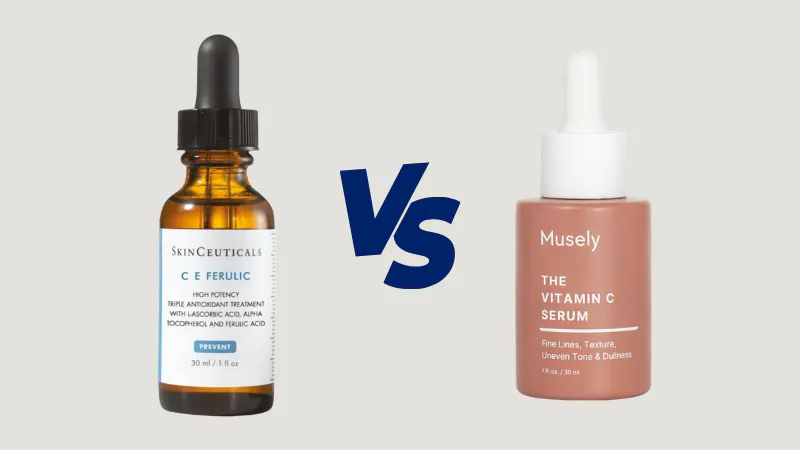
Ask our readers what they wish they could find a comparable for, and one product comes up more than anything else in skincare or makeup combined: SkinCeuticals C E Ferulic. The reasons are almost always the same. People trust the research behind it, they've heard the hype for a decade, and they can't quite justify paying $185 for a 30 mL bottle year after year.
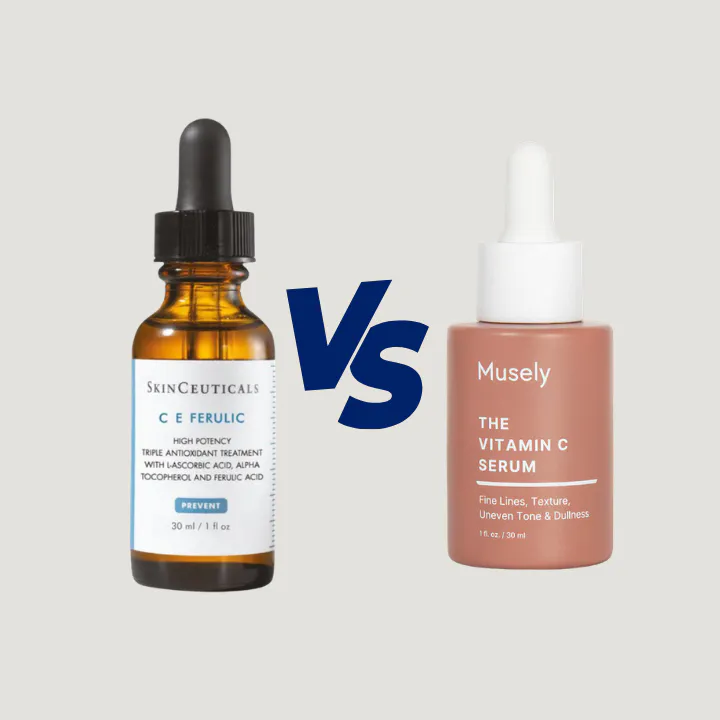
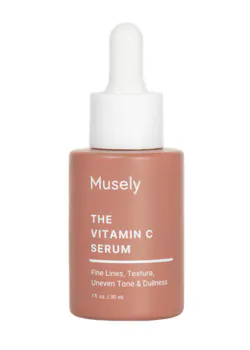
So we paid attention when Musely launched a vitamin C serum built on that exact formula architecture. For years, Musely has been known almost exclusively for prescription treatments, melasma, rosacea, anti-aging, hair loss, the kind of derm-office skincare you need a consultation for. An everyday, over-the-counter antioxidant serum is new territory for them. What they put in it is the interesting part: 15% pure L-ascorbic acid, 1% vitamin E, and 0.25% ferulic acid, the same three actives, in nearly the same ratio, that made C E Ferulic the product everyone else gets measured against.
Key Takeaways
- Musely, a brand built on prescription melasma, rosacea, and anti-aging treatments, just entered the vitamin C category using 15% pure L-ascorbic acid, 1% vitamin E, and 0.25% ferulic acid, the same three actives behind SkinCeuticals C E Ferulic.
- At $68 for 30 mL (for a 2 month supply), it costs roughly a third to a half of what SkinCeuticals ($185), SkinBetter Alto Advanced ($185), and Obagi Professional-C 15% ($130) charge for a comparable size.
- SkinCeuticals C E Ferulic is the single most-requested item in our reader surveys, ahead of every other skincare or makeup product we asked about.
The Formula That Started It All
The 15/1/0.5 combination of L-ascorbic acid, vitamin E, and ferulic acid isn't a marketing invention. It traces back to research out of Duke University in the early 2000s that found the three ingredients together were more photostable and more effective at protecting skin from UV and pollution damage than any of them alone. SkinCeuticals built C E Ferulic around that research and has spent twenty years turning it into the reference point every other vitamin C serum gets compared to.
Musely's version matches two of the three numbers exactly: 15% L-ascorbic acid and 1% vitamin E. Where it differs is ferulic acid, 0.25% versus SkinCeuticals' 0.5%, half the concentration. Ferulic acid's role in the combination is largely about stabilizing the vitamin C and extending its antioxidant activity. Neither brand has published independent stability or penetration data comparing the two head to head, so we can say the published concentrations differ; we can't say how that plays out on skin over time.
Sodium hyaluronate and panthenol round out Musely's formula, added hydration and barrier support that C E Ferulic's more stripped-down formula doesn't include. Musely also uses a low-pH delivery system, which matters more than people realize with L-ascorbic acid specifically, since the acid needs a low pH to stay in its active, absorbable form.
How the Rest of the Category Compares
SkinBetter Alto Advanced Defense and Repair Serum takes a different approach entirely. Instead of the classic three-ingredient combination, it's built on a proprietary blend of several vitamin C forms plus a broader antioxidant complex. Fair comparison on price and category. Different philosophy on formula.
Obagi Professional-C Serum 15% sticks with 15% L-ascorbic acid as its headline active, which puts it closer to Musely and SkinCeuticals on paper. Where it tends to differ is the supporting cast: it's built as a more concentrated, simpler vitamin C treatment, without the same vitamin E and ferulic acid stabilization system layered in.
Revision C+ Correcting Complex 30% is the outlier of the group. Despite the "30%" on the label, that's a concentration of THD ascorbate, a lipid-soluble vitamin C derivative, not pure L-ascorbic acid. Derivatives like THD ascorbate are gentler and more stable on the shelf, but they work differently in skin than the acid form, so the percentages aren't directly comparable even though the number looks higher.
The Price Math
Do the math and the gap is stark. All figures below are for a 30 mL (1 oz) bottle, or the closest equivalent size:
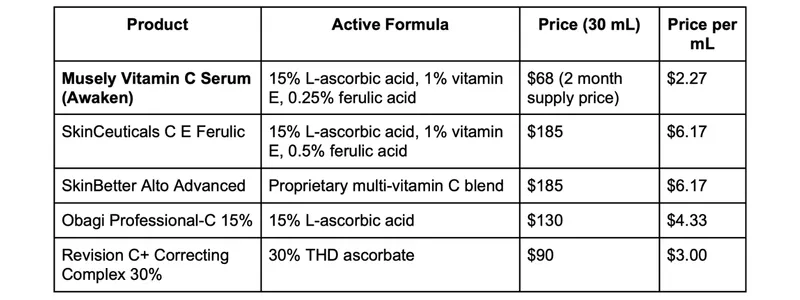
We're using the $68 price throughout this comparison because it's the price most readers will actually see and pay at checkout, and since you can cancel after the first shipment, there's no real commitment behind it. In fairness, that price does require signing up for a subscription, while the other four brands' prices are one-time purchases with no such requirement. Even at Musely's one-time price of $97, it's still $88 less than SkinCeuticals and SkinBetter, and $33 less than Obagi. Revision, at roughly $90, is the one product here where Musely's one-time price doesn't clearly win on cost, though Revision is built on a vitamin C derivative rather than pure L-ascorbic acid, which puts it in a different formula category altogether.
That's a $117 gap between Musely and SkinCeuticals on the exact same core actives, or roughly $351 a year if you're replacing a bottle every three months on the pricier option. Real money, for a formula built on nearly identical numbers.
(If you want to see the formula for yourself before committing to a full-price bottle elsewhere, shop the Musely Vitamin C Serum here.)
What Our Readers Have Been Saying
We didn't have to guess that this comparison would matter to you. It's the single most common answer we get when we ask readers what they wish they could find a comparable for:
"SkinCeuticals Vit C, I need to budget but would love to find a similar quality/functionality to this product."
"SkinCeuticals CE Ferulic. It gets so much hype, but I can't justify the price point."
"SkinCeuticals Vit C because it's scientifically the best and most tested, but it's so expensive."
"Skincentuals C E ferric, along with everyone else in the world lol. I'm currently testing out dupes for it to see which I like best."
SkinBetter came up too, just less often: "Dupes to skinbetter products because they are soo expensive but I hear amazing things about them." Obagi showed up as well, in passing: "I need a more affordable obagi dupe." Revision didn't come up specifically in our surveys, which tracks, since its derivative-based formula puts it in a slightly different conversation than the other three.
The Bottom Line
An ingredient list can only tell you so much. Matching two of three key percentages doesn't guarantee Musely's serum performs identically to SkinCeuticals on your skin, concentration, stability, packaging (dark glass and airtight delivery matter enormously for L-ascorbic acid, which oxidizes easily), and manufacturing consistency all factor in, and none of that shows up on a spec sheet. SkinCeuticals also has two decades of clinical citations and dermatologist recommendations behind it, and that track record is a legitimate reason some people will keep paying for it regardless of price.
What we can say is that Musely entered a crowded, expensive category with the textbook gold-standard combination rather than a diluted or derivative version of it, and priced it at a third to half of what the established names charge. Coming from a brand built on prescription treatments, it's a bold first move into everyday skincare.
Before You Switch
If you're moving to any new vitamin C serum, ease into it rather than swapping cold. Patch test on your inner arm for 24 hours first, especially if you have sensitive or reactive skin, since L-ascorbic acid can cause mild tingling or redness at first use. Introduce it every other morning for the first week before going daily, apply it before moisturizer and always follow with broad-spectrum SPF, vitamin C boosts your skin's defenses but doesn't replace sunscreen. Visible brightening tends to take eight to twelve weeks either way, so give it a full cycle before judging results.
And if you do want to try the formula that's been the most requested comparison in our reader inbox all year, [Musely's version is live now].
FAQ
Is Musely Vitamin C Serum a dupe for SkinCeuticals C E Ferulic? It shares the same three core actives, 15% L-ascorbic acid and 1% vitamin E, at the same concentrations, with ferulic acid at 0.25% versus SkinCeuticals' 0.5%. It's close on paper but not an exact clone, and no independent testing has compared the two directly.
What's the difference between Musely Vitamin C Serum and SkinCeuticals C E Ferulic? The main formula difference is ferulic acid concentration (0.25% vs. 0.5%). Musely also adds sodium hyaluronate and panthenol for hydration, which C E Ferulic's formula doesn't include. The biggest difference for most people will be price: roughly $2.27–$3.23 per mL versus $6.17 per mL.
Does Musely Vitamin C Serum use pure vitamin C or a derivative? Pure L-ascorbic acid at 15%, not a derivative like THD ascorbate or sodium ascorbyl phosphate.
Is this a good vitamin C serum for beginners? L-ascorbic acid at 15% is a moderate-to-strong concentration, not the gentlest starting point. If you've never used a vitamin C serum before, patch test first and introduce it gradually rather than applying daily right away.