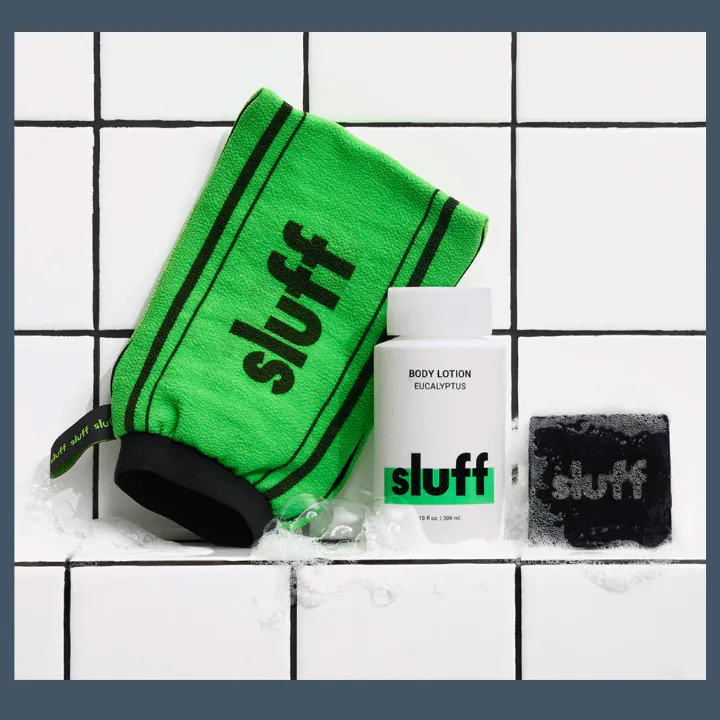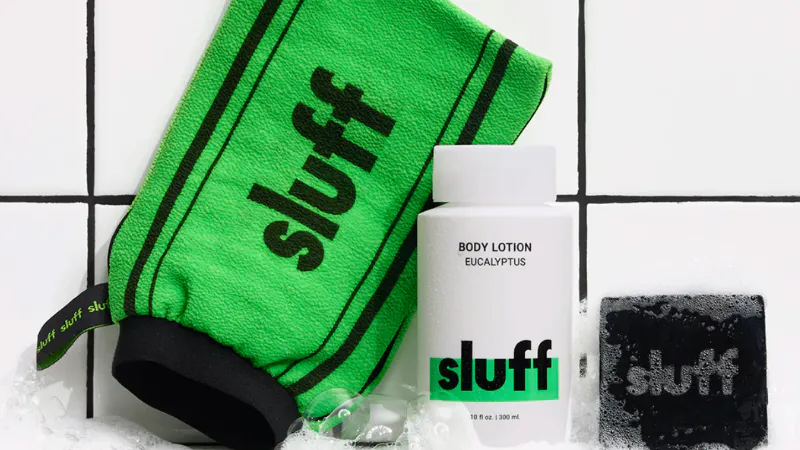
A super cool body exfoliating kit just launched and it has everything going for it. The branding is considered, the concept is fresh, and it has that specific quality that makes skincare content spread: the visual payoff is almost too satisfying to scroll past. Dead skin rolling off in real time is the kind of thing people film, post, and can't look away from. At $48, it's not an unreasonable ask either. This one has future viral written all over it.
There is just one problem. They don't ship to me. So I was forced to find a dupe.
Turns out the method behind the kit is older than the brand by centuries, the ingredients are simpler than you'd think, and the whole thing costs about $15 to put together yourself. That's $33 less than the kit. My skin was softer after the first session than it's been after months of regular body lotion. Not a bad consolation prize.
Key Takeaways
- The sluff it kit is built around seshin, the Korean bathing ritual of using heat and a rough mitt to mechanically remove dead skin. The method is the product.
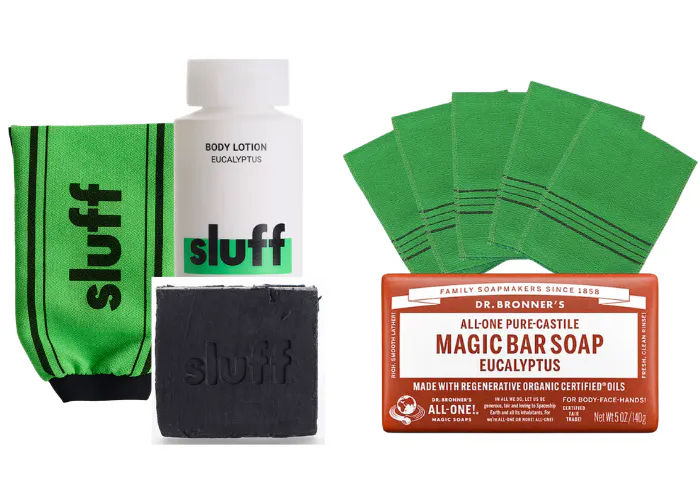
- The kit retails for $48. A DIY version using a castile bar soap and a mitt from Amazon runs roughly $15, and the mitt pack gives you five sessions for that price. That's a $33 saving for the exact same method.
- The pre-step soap, the mitt, and the lotion can all be sourced separately without sacrificing the method's effectiveness.
- Your lotion step requires nothing new. Whatever body lotion you already own works fine.
What seshin actually is, and why it works
Seshin is a Korean bathing tradition that predates any product system built around it. The idea is simple: expose skin to prolonged heat and steam so the outermost layer of dead cells loosens, then use a slightly abrasive cloth to physically lift it away. The visual result, dead skin rolling off in grey, eraser-like bits, is genuinely satisfying and the reason this method has migrated from Korean bathhouses to TikTok feeds in the last few years.
This is not the same as a sugar scrub or a chemical exfoliant. Those work on the surface. Seshin works through friction and mechanical action, and the heat prep is what makes it possible. Skip the hot shower soak and the mitt doesn't perform the same way.
Sluff built a brand around making this approachable for a Western bathroom routine, and they did it well. The three-step kit walks you through exactly what to do. For anyone new to the method, that handholding has real value.
Step 1: The pre-sluff bar
The bar's job is to remove the slip layer sitting on top of your skin before the mitt touches it. Lotion residue, body oil, SPF, self-tanner, anything that would give the mitt too much glide and prevent it from gripping the skin properly. This step matters more than people realize.
Sluff's bar is a true soap at its core: olive oil and coconut oil saponified with sodium hydroxide, the same construction as a classic castile bar. Shea butter adds a mild conditioning quality to the lather without leaving a heavy film. The functional standout is charcoal, which draws out oil and product residue from the skin surface, giving the mitt a cleaner canvas to work on. Hydrolyzed rice protein and spirulina round out the formula with skin-nourishing benefits, though neither is doing the heavy lifting on the prep side.
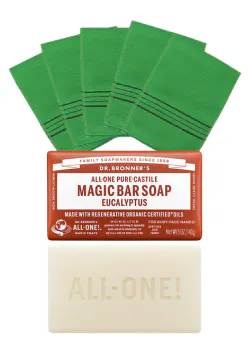
For a DIY version, a castile bar soap is the closest functional match. Dr. Bronner's Pure-Castile Bar Soap in eucalyptus (link) runs around $5 and shares the same saponified olive and coconut oil base as the sluff bar. The main thing you're not replicating is the charcoal, which is the most functional differentiator. If you want to get closer to the full effect, a quick dry brush or gentle cleanse with a washcloth before the mitt achieves something similar by physically clearing the surface before you start.
Avoid anything labeled "moisturizing" or "beauty bar" for this step. Dove is the classic example of what not to use here. The conditioning agents in those bars are specifically designed to leave a layer on skin, which is the opposite of what you need.
Step 2: The mitt
This is the only piece of the kit that actually requires a purchase if you don't already own one. And it's where most of the price gap lives.
The traditional Korean Italy towel is a viscose weave. That material distinction matters. Cotton and microfiber exfoliating gloves are too soft to create the friction needed for the dead skin to roll. Viscose has the right texture. If the mitt doesn't have enough grip, you'll scrub without the satisfying result.
The good news is that viscose exfoliating mitts are widely available on Amazon at a fraction of the cost. When searching, sort by review count and look for the closest to five stars. Most of the well-reviewed options run around $10 for a pack of five, and many of them come in that same bright green that's become the visual signature of this whole category.
Technique matters as much as the mitt itself. Use firm pressure and long strokes. More pressure means more results. Start after two to three minutes of hot shower exposure so the skin has had time to soften.
Step 3: The lotion
Apply to damp skin immediately after towel drying. That timing is the only rule. The skin barrier is more receptive right after exfoliation and while still slightly damp, so absorption is better than applying lotion to fully dry skin twenty minutes later.
Sluff's lotion is a well-formulated, aloe-based moisturizer with shea, jojoba, glycerin, centella asiatica, and rice extract. It's a genuinely nice product. It's also not doing anything your existing body lotion can't replicate at this step. Use whatever you already have.
The method is the product
What sluff sells isn't a proprietary formula. The pre-sluff bar has some interesting additions in charcoal, hydrolyzed rice protein, and spirulina that give it more functionality than a basic soap, but the core value of the kit is the system itself: the sequence, the instructions, the removal of guesswork for someone trying seshin for the first time.
If you can get your hands on the sluff it kit, it's worth it for that reason. The branding is appealing, the experience is cohesive, and $48 for something you'll use weekly for four to six weeks is a reasonable ask. We'd buy it.
For everyone who can't access it, the method is yours anyway. It predates the brand by centuries.
One thing the DIY version can't fully replicate is having someone else do it. The traditional seshin experience is performed by a professional in a bathhouse setting, and there's a reason for that beyond convenience. Reaching your own back with a mitt is genuinely awkward, and some of the most satisfying work happens on surfaces you simply can't get to alone. If this method crosses over the way it seems to be heading, spa menus in cities everywhere are going to start offering seshin treatments. That's an experience worth seeking out when it arrives near you. Consider this the warm-up.
A few things to keep in mind
The mitt should be washed after each use and hung to dry. Skipping this creates the kind of bacterial environment you don't want near your skin.
Start once a week. Some skin, particularly skin prone to keratosis pilaris or heavy product buildup, can handle more frequent sessions, but once a week is the right baseline while your skin adjusts. Use lighter pressure on thinner-skinned areas and avoid this method on any sunburned, actively broken out, or irritated skin entirely.
Don't use on your face.
DIY Kit: Dr. Bronner's castile bar + viscose exfoliating mitt. About $15 total. That's $33 back in your pocket for the same centuries-old method.