Key Takeaways:
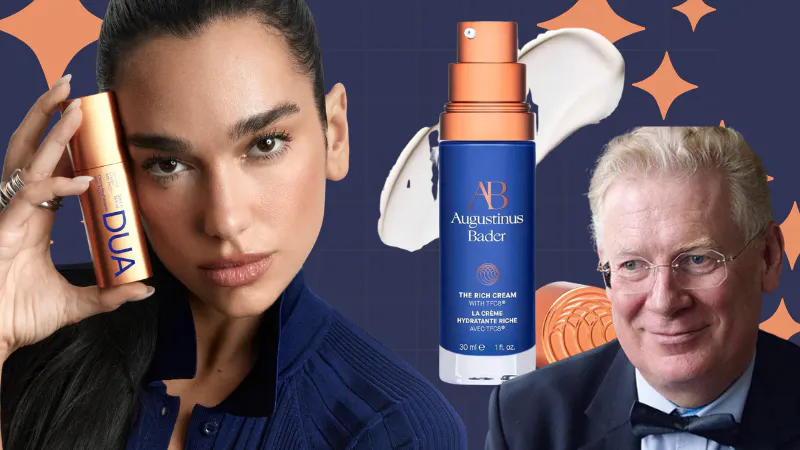
- Augustinus Bader launched DUA with Dua Lipa, introducing TFC5™—a "reduced intensity" version of their flagship TFC8® technology
- TFC5™ is positioned for younger skin (ages 18-35) with minimal damage; TFC8® targets mature, aging skin
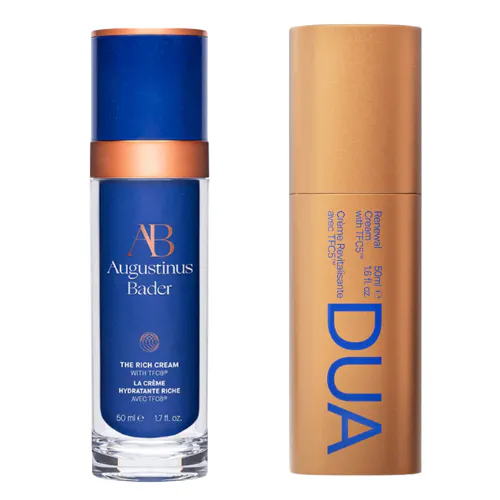
- Price gap: The Dua Renewal Cream ($75) vs. The Rich Cream ($185-$305)—a 2.5-4x difference
- Both formulas share overlapping ingredients (peptides, antioxidants, rice proteins) but differ in base formulation richness
- The collaboration raises questions about brand positioning: democratization or dilution of luxury credibility?
- Ingredient-aware consumers now face a value challenge—does similar peptide technology justify the premium pricing of TFC8®?
Introduction
The launch of the Dua Renewal Cream by Augustinus Bader in collaboration with Dua Lipa has stirred intense discussion across the skincare world. Most notably, it introduces a new proprietary complex: TFC5™, a lower-tier counterpart to the brand's original and patented TFC8® technology. At SKINSKOOL, where we analyze formulas based on ingredients and value, we take an objective look at whether this celebrity collaboration strengthens or undermines the credibility of a brand long associated with luxury, science, and regenerative skincare.
A Quick Recap: What Is TFC8®?
TFC8®, or Trigger Factor Complex 8, is Augustinus Bader's signature technology, developed from Professor Bader's background in stem cell biology and wound healing. It combines amino acids, high-grade vitamins, and skin-identical molecules to support the skin's own renewal process. TFC8® isn't just a peptide blend; it's integrated into a lipid-rich, barrier-supportive base, designed for long-term skin regeneration.
Introducing TFC5™: A New Tier of Renewal
With the Dua Renewal Cream, Bader introduces TFC5™, described as a complex of amino acids, vitamins, and synthesized molecules—similar in spirit to TFC8®, but with notable differences. While the full composition of TFC5™ isn't publicly disclosed, the INCI list reveals a suite of oligopeptides (195–199 and 6), Hydrolyzed Rice Bran Protein, glycogen, trehalose, and antioxidants like tocopherol and green tea extract. These ingredients suggest a peptide-forward, hydration-supportive complex aimed at younger, combination-to-normal skin types.
Clinical Studies: What the Data Shows
The TFC8®‑powered formulations from Augustinus Bader are supported by brand‑reported 4‑week clinical trials showing a 37% reduction in forehead wrinkles and 54% reduction in crow’s‑feet wrinkles for The Rich Cream. The same source lists a 145% improvement in hydration at 4 weeks.
In contrast, the TFC5™‑powered line (DUA) reports a 4‑week trial in ages 18‑45 where 100% of participants showed improvement in fine lines/wrinkles, dryness was “reduced by 100%,” and blemishes reduced by 61%.
What the data suggests is a difference in emphasis: TFC8® appears positioned for more advanced signs of aging (wrinkle depth, firmness, barrier repair) while TFC5™ is presented as a preventive, younger‑skin option focusing on hydration, texture, and blemish concerns.
That said, the public clinical data for both lines come from brand‑commissioned studies rather than independent peer‑reviewed research, and the metrics do not provide full methodology or placebo comparisons. Thus, while the figures support the brand’s positioning, they should be interpreted with caution.
Ingredient Overlap and Distinction
From an INCI-level perspective, both The Rich Cream and The Dua Renewal Cream share ingredients like Camellia Sinensis Leaf Extract, Tocopherol, Hydrolyzed Rice derivatives, and Arginine. However, the TFC8® formula is paired with a richer base: avocado oil, shea butter, squalane, and other occlusives that target dry or aging skin. TFC5™, by contrast, is housed in a lightweight emulsion featuring Baobab Oil, Pentylene Glycol, and polymer-based texturizers.
Price Gap, Value Question
The most obvious tension arises in pricing. The Rich Cream with TFC8® retails for $185 for 30ml ($265-$305 for the larger 50ml size). The Dua Renewal Cream with TFC5™ comes in at $75. For ingredient-savvy consumers, this introduces a clear challenge: can a product with similar peptide activity, produced by the same brand, justify a 2.5-4x price gap? At SKINSKOOL, where we track dupes and alternatives through functional and ingredient similarity, this type of launch shifts the value conversation significantly.
Brand Strategy or Brand Dilution?
From one angle, the collaboration invites a broader audience into the Bader ecosystem. It addresses consumer demand for peptide-rich skincare at an accessible price point and leverages celebrity influence. But it also risks eroding the premium aura of TFC8®. Without a clear scientific and results-based distinction between the two complexes, TFC8® may begin to feel less exclusive, especially if users see visible benefits from TFC5™ at a fraction of the price.
Final Thoughts
Is this a smart democratization of luxury skincare, or a confusing dilution of a high-science brand? That likely depends on how Augustinus Bader continues to differentiate the performance and clinical credibility of TFC8®. For now, ingredient-aware consumers will be watching closely. The value narrative has shifted—and that might be the most disruptive outcome of all.