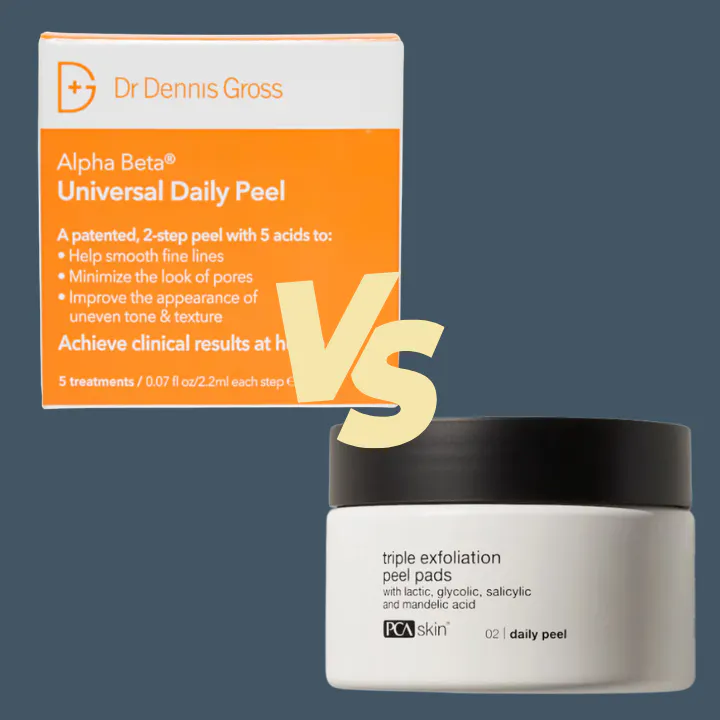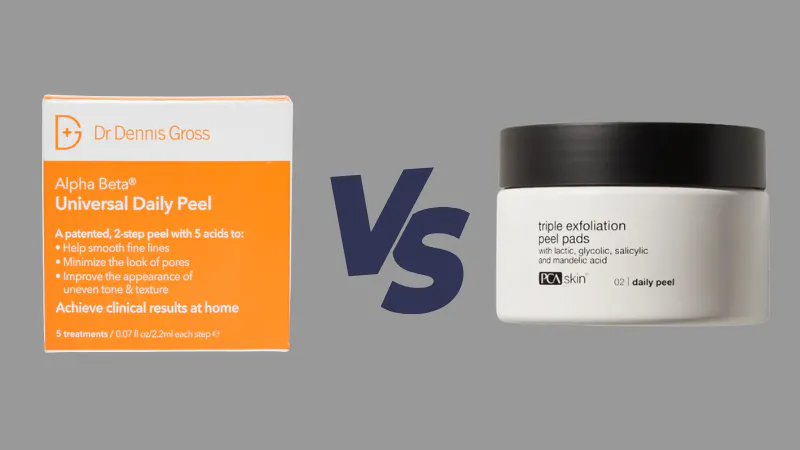
Dr. Dennis Gross Alpha Beta Universal Daily Peel pads are one of the most requested dupes in our inbox. People love them, they work, and at $94 for 30 uses the request for a comparable that actually holds up on the ingredient side is completely understandable.
PCA Skin's Triple Exfoliation Peel Pads ($60 for 30 uses) are new. They launched exclusively through licensed professional practices, the same channel PCA Skin has built its reputation in for over 30 years. They've just made them available on their direct to consumer site for the first time. When you put the formula side by side with Dennis Gross, the comparison is worth doing carefully, because the differences go deeper than price.
Key Takeaways
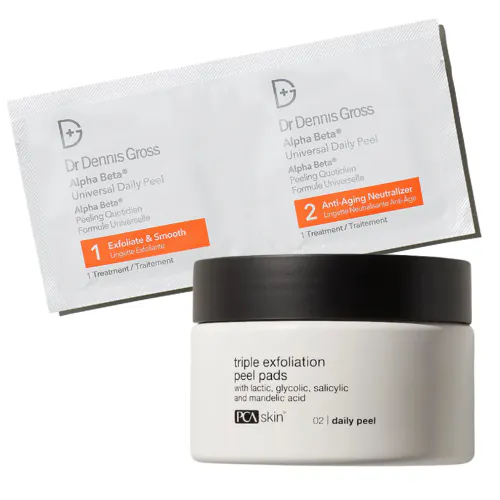
- PCA SKIN's Triple Exfoliation Peel Pads use three exfoliation mechanisms — chemical, enzymatic, and physical — while Dr. Dennis Gross relies on chemical exfoliation (AHAs and BHA) only.
- PCA SKIN is $60 for 30 uses ($2.00/use). Dr. Dennis Gross is $94 for 30 uses — but that's 60 physical pads, two per application ($3.13/use). That's $34 more for the same number of treatments.
- Dr. Dennis Gross Step 1 contains fragrance, linalool, and benzyl salicylate. PCA SKIN is fragrance-free, which matters on freshly exfoliated skin, particularly for sensitive skin types.
- Dr. Dennis Gross markets its Step 2 as an "Anti-Aging Neutralizer" and leads with antioxidants in its ingredient callouts. PCA SKIN builds niacinamide, a peptide, and sodium hyaluronate directly into the exfoliant itself.
Why Dr. Dennis Gross Has the Reputation It Has
The Alpha Beta Universal Daily Peel has been a staple in many skincare routines for years. The two-step system is genuinely clever: Step 1 delivers the acid exfoliation, Step 2 neutralizes the acidity and delivers a payload of antioxidants including resveratrol, CoQ10, and green tea. It's approachable for first-time peel users, it works, and it comes individually wrapped so each pair stays fresh until use. The reputation is earned.
What's worth understanding is that each Dennis Gross "use" requires two pads — one for each step. So a box of 30 uses contains 60 physical pads. At $3.13 per use, the formula needs to justify the cost. When you look at what's actually in each step versus what PCA SKIN is doing for $1.13 less per application, the comparison gets more interesting.
The Acid Profiles
Both formulas lead with the acids you'd expect. Glycolic acid and lactic acid appear in both, doing the work most people associate with chemical exfoliation: loosening the bonds between dead skin cells, accelerating cell turnover, and improving surface texture over time. Glycolic's small molecular size allows it to penetrate more deeply; lactic is gentler and draws moisture in as it works.
Salicylic acid is present in both formulas as well. As a BHA, salicylic is oil-soluble, which means it can travel into the pore lining rather than staying on the surface. For anyone dealing with congestion or enlarged pores, this is a meaningful inclusion alongside the AHAs.
Mandelic acid appears in PCA SKIN's formula but not Dennis Gross. Mandelic has a larger molecular structure than glycolic, which means slower, more controlled penetration. It tends to be better tolerated on sensitive and reactive skin while still delivering brightening and anti-aging benefits.
Where the two formulas diverge most noticeably is in what PCA adds beyond the standard AHA/BHA framework.
Where PCA SKIN Goes Further
Both pads deliver some degree of physical exfoliation simply by contact with the skin. What distinguishes PCA SKIN's pad is that the physical component is intentional and designed: one side is textured for the t-zone and areas of thicker skin, the other smoother for more delicate areas. It's a considered detail that reflects the professional-practice origins of this product, and one that Dennis Gross's uniform pad doesn't replicate.
Gluconolactone and Lactobionic Acid are both PHAs, polyhydroxy acids, and neither appears anywhere in the Dennis Gross two-step system. Maltobionic acid also appears in PCA SKIN's ingredient list and shares structural similarities with other PHAs, though the brand's own materials classify gluconolactone and lactobionic as the primary PHA actives. PHAs are a newer generation of chemical exfoliant with a molecular structure large enough that they work primarily at the skin's surface rather than penetrating as deeply as glycolic or lactic acid. The result is exfoliation that tends to be gentler and better suited to sensitive or compromised skin. Importantly, PHAs are also humectants: they draw moisture toward the skin as they exfoliate, which means the barrier isn't just being stripped back, it's being supported at the same time.
Enzymatic exfoliation is the third mechanism, delivered through Prickly Pear Extract (hydrolyzed opuntia ficus-indica flower extract). Rather than lowering the skin's pH to loosen cellular bonds the way acids do, the prickly pear extract stimulates the skin's own desquamation enzymes, the ones responsible for natural cellular shedding, and activates endogenous cellular turnover. It's working with the skin's existing renewal process rather than overriding it. That distinction matters for sensitive skin types, and it's a mechanism neither step of the Dennis Gross system replicates.
Niacinamide appears in PCA SKIN's formula at what appears to be a meaningful position in the ingredient list. Niacinamide supports barrier function by boosting ceramide synthesis and reducing transepidermal water loss, which makes it a thoughtful inclusion in an exfoliant specifically. You're loosening and removing dead skin cells with one hand and reinforcing the barrier with the other. The Dennis Gross formula doesn't include niacinamide in either step.
Palmitoyl Tetrapeptide-7 is a signal peptide with documented anti-inflammatory properties. Its presence in an exfoliant formula is notable: exfoliation triggers a mild inflammatory response in the skin, and an ingredient that modulates that response is working actively to keep the process comfortable and controlled. Nothing comparable appears in either Dennis Gross step.
Sodium Hyaluronate in PCA SKIN's formula adds hydration directly alongside the exfoliation. The Dennis Gross two-step system doesn't include hyaluronic acid in either pad.
What Dr. Dennis Gross Has That PCA Doesn't
Step 2 of the Dennis Gross system is worth addressing honestly. The brand describes it as an "Anti-Aging Neutralizer," and its primary function is stopping the acid activity from Step 1 with sodium bicarbonate. The antioxidant payload, resveratrol, CoQ10, green tea, vitamin E, is real, and the inclusion of copper PCA and zinc PCA adds skin-calming and sebum-regulating properties that PCA SKIN doesn't replicate.
Retinol and ascorbic acid also appear in the Dennis Gross Step 2 ingredient list. Notably, the brand doesn't call either of them out as key actives in its marketing, leading instead with the antioxidant trio of green tea, resveratrol, and CoQ10. When brands don't feature an active in their callouts, it's generally worth noting, particularly for ingredients where concentration is everything.
The Step 2 system is genuine added value for someone building a minimal routine who wants antioxidant protection delivered alongside their exfoliant. However, I'm not sure if this would replace a dedicated vitamin C serum and antioxidant moisturizer which many people already have in their routines. The argument for that second pad, and the higher price per use, weakens considerably.
The Clinical Data
PCA SKIN conducted a 12-week case study on the Triple Exfoliation Peel Pads using 14 female participants, ages 30 to 60, across all skin tones and types including sensitive skin (Fitzpatrick I-VI). Participants used one pad daily for 12 weeks. The instrumentation results showed a 48% improvement in hydration, 36% improvement in the appearance of fine lines and wrinkles, 14% improvement in visible texture, and 11% improvement in visible pore appearance. Participants reported a 50% improvement in skin texture by self-assessment.
The study is small and was conducted by the brand. Fourteen participants is a limited sample, and results measured by instrumentation and self-assessment don't always translate uniformly across a wider population. That said, the range of skin tones and types included, and the consistency of results across sensitive skin specifically, is worth noting given the product's positioning.
The brand also conducted ex-vivo testing on three markers relevant to barrier function and desquamation: Filaggrin protein expression (a structural protein that maintains hydration and skin pH), ELOVL4 gene expression (an enzyme essential to building the skin's lipid barrier), and KLK7 gene expression (the desquamation enzyme that regulates natural cellular shedding). All three showed increased expression with treatment compared to untreated skin. Ex-vivo data is generated on skin tissue outside the body and doesn't replicate all the conditions of living skin, so it's directional rather than definitive. But for a product making a "controlled exfoliation" claim, the fact that barrier-forming proteins appear to increase alongside the exfoliation activity is relevant context.
Dr. Dennis Gross publishes a clinical and consumer perception study of 28 participants for the Alpha Beta Universal Daily Peel, showing 92% saw a brighter, firmer, clearer complexion in one week and 100% saw improved hydration in two weeks. Their study has a larger participant count; PCA SKIN's study ran longer at 12 weeks and used instrumentation measurement alongside self-assessment. Both brands have done the work to back their claims, which puts them in a different category from most peel pad products on the market.
The Fragrance Question
Dr. Dennis Gross Step 1 contains fragrance (parfum), linalool, and benzyl salicylate. They're applied in Step 1, directly to the skin before the acid exfoliation begins, on a surface that will become more permeable as the acids work.
PCA SKIN's formula is fragrance-free across the board.
For most people this won't cause a reaction. For anyone with sensitive skin, reactive skin, or a history of fragrance sensitivity, applying a fragranced formula during an exfoliation step is a real consideration. PCA SKIN positions the Triple Exfoliation Peel Pads as suitable for most skin types, including sensitive, and the fragrance-free formulation is part of what makes that claim credible.
The Price, Per Use
Dr. Dennis Gross Alpha Beta Universal Daily Peel: $94 for 30 uses (60 physical pads, 2 per use) = $3.13/use
PCA SKIN Triple Exfoliation Peel Pads: $60 for 30 uses (1 pad per use) = $2.00/use
Starting at two uses per week, both boxes last 15 weeks. Over that stretch, Dennis Gross costs $34 more for the same number of treatments. Over a year of consistent use, that gap compounds to well over $100.
The formula doing more exfoliation work for less money per use is PCA Skin.
The Bottom Line
Dr. Dennis Gross Alpha Beta Universal Daily Peel earned its reputation. The two-step system is well-designed, the individual packaging keeps each application fresh, and the antioxidant payload in Step 2 is real. If you've been using it and love it, there's no compelling reason to switch based on ingredient lists alone. Personal results, skin familiarity, and routine consistency matter more than any single comparison.
That said, PCA SKIN's Triple Exfoliation Peel Pads deliver three exfoliation mechanisms, built-in barrier support through niacinamide and PHAs, a signal peptide, and a completely fragrance-free formula, for $34 less per box. It's not trying to compete on branding. It's competing on ingredients.
For sensitive skin types specifically, the combination of PHAs, enzymatic exfoliation, niacinamide, and no fragrance makes a meaningful case. And for anyone who's been eyeing Dennis Gross but hasn't committed at $94, this is the closest the ingredient story gets.
Ingredient lists don't tell you everything. Concentration, pH, and formulation stability all matter and aren't fully disclosed here. But based on what's on the label, PCA SKIN's formula appears to work at more levels simultaneously for less money per use.
How to Use PCA SKIN Triple Exfoliation Peel Pads
After cleansing and toning, use the enclosed tweezers to pick up the pad and swipe across face and neck. Follow with your usual treatment serums and moisturizer in the evening, or broad spectrum SPF in the daytime.
Start with two times per week and increase gradually as your skin adjusts. The formula is designed for daily use and the case study was conducted at once-daily application, so building toward that cadence is reasonable for most skin types. Give it four to six weeks before assessing results. Initial purging or mild sensitivity in the first two weeks is normal as cell turnover increases.
Avoid using on the same nights as a dedicated retinol, particularly when starting out.
You can find PCA SKIN Triple Exfoliation Peel Pads here.
FAQ
Are PCA SKIN Triple Exfoliation Peel Pads a dupe for Dr. Dennis Gross? They're a strong comparable. The formats are the same, the acid base overlaps significantly, and the price per use is lower. Where they differ is in exfoliation mechanism: PCA adds PHAs and enzymatic exfoliation that Dennis Gross doesn't have. Dennis Gross adds a two-step neutralizing system with antioxidants. Whether that makes one better than the other depends on what your skin needs and what else is in your routine.
Does Dr. Dennis Gross come with 30 pads or 60? A box of 30 uses contains 60 physical pads, two per application. Step 1 is the exfoliant, Step 2 is the neutralizing antioxidant pad. Each use requires both. PCA SKIN's Triple Exfoliation Peel Pads are one pad per use, so 30 pads equals 30 uses.
Does PCA SKIN have clinical data for the Triple Exfoliation Peel Pads? Yes. A 12-week case study of 14 participants across all skin types and tones, including sensitive skin, showed a 48% improvement in hydration, 36% improvement in the appearance of fine lines and wrinkles, and 50% improvement in skin texture by self-assessment. The study was brand-conducted and the sample size is small, so results may not reflect the full range of outcomes across a broader population. Ex-vivo testing also demonstrated increased expression of three markers related to barrier formation and desquamation.
What is the difference between AHAs, BHAs, and PHAs? AHAs (alpha hydroxy acids) like glycolic and lactic acid are water-soluble and work on the skin's surface to loosen dead skin cells and improve texture. BHAs (beta hydroxy acids) like salicylic acid are oil-soluble and can penetrate the pore lining to address congestion. PHAs (polyhydroxy acids) like gluconolactone and lactobionic acid have larger molecules that work more gently at the surface, making them better tolerated by sensitive skin. PHAs also function as humectants, drawing moisture into the skin as they exfoliate.
What is enzymatic exfoliation? Enzymatic exfoliation uses protein-digesting enzymes, often derived from fruits or fermented ingredients, to break down the keratin in dead skin cells rather than using acids to lower the skin's pH. It tends to be gentler than acid exfoliation and is particularly well-suited to sensitive or reactive skin types.
Can I use peel pads with a retinol serum? Not on the same night, particularly when starting out. Both exfoliate and accelerate cell turnover, and combining them before your skin is acclimated increases the risk of irritation and barrier disruption. Use them on alternating nights and allow a few weeks before layering.
Are PCA SKIN products available without a prescription? PCA SKIN is sold through licensed skincare professionals and specialty retailers. The Triple Exfoliation Peel Pads launched exclusively through professional practices and have recently become available on PCA SKIN's direct site. No prescription is required, but the formula is professional-grade, which is reflected in the exfoliation strength and the supporting ingredient system around the acids.
Is Dr. Dennis Gross fragrance-free? No. The Alpha Beta Universal Daily Peel Step 1 contains fragrance (parfum), linalool, and benzyl salicylate. For most people this doesn't cause a reaction, but for sensitive or reactive skin types it's worth factoring in, particularly on an exfoliant that increases skin permeability.
How often should I use exfoliating peel pads? Start at two times per week and increase gradually as your skin adjusts. Most people find two to three times per week is a sustainable cadence for maintenance. Daily use is possible for some skin types but isn't necessary for results and increases the risk of over-exfoliation.