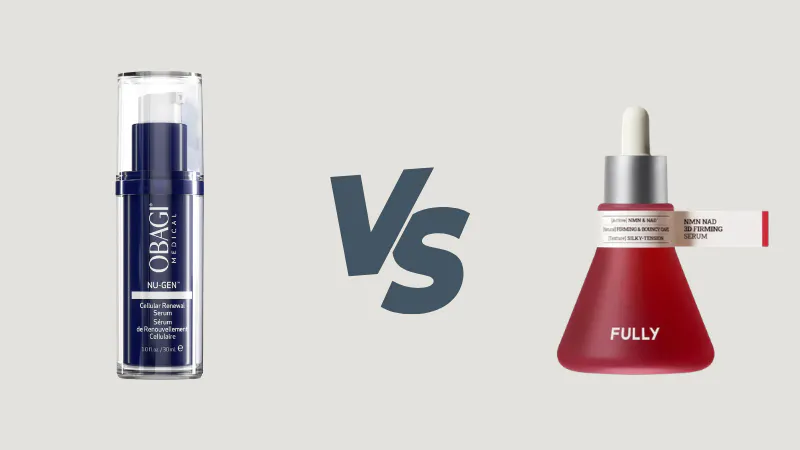
NAD+ has spent the last few years migrating from longevity clinics and supplement stacks into mainstream skincare, and it's moving fast. What started as an IV drip ingredient at functional medicine practices is now showing up across K-beauty launches, prestige serums, and medical-grade lines alike. The science behind it is compelling: NAD+ is a coenzyme present in every skin cell that declines with age, and replenishing it topically appears to support cellular energy, DNA repair, and skin renewal. Brands at every price point are racing to stake a claim in the space.
Obagi is not a brand that needs an introduction in serious skincare circles. With over 35 years in the professional skincare space and a distribution model built around physicians and dermatologists, their launches carry weight. When they announced the NU-GEN Cellular Renewal Serum in March 2026, it felt like a signal that the cellular energy trend had fully arrived. A medical-grade NAD+ serum clinically proven to visibly rewind skin's age by up to six years is the kind of claim that gets attention, and the kind of brand backing that makes people believe it.
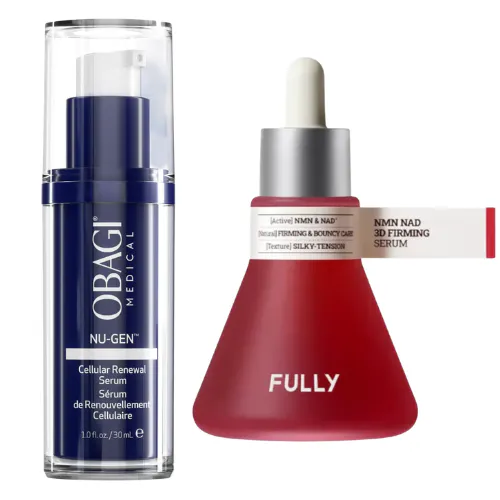
The formula at the center of that claim is the AGE CTRL Complex, a trio of NAD+, NMN (nicotinamide mononucleotide), and niacinamide working together to help replenish diminished NAD+ within skin cells. It's a focused, purposeful approach. At $175 for 1oz (30mL), it's priced accordingly. So when the FULLY NMN NAD 3D Firming Serum came up in our match results, we pulled both ingredient lists. What we found was worth writing about.
Key Takeaways
- Both serums contain the same NAD+ precursor trio, NAD+, NMN, and niacinamide, that forms the core of Obagi's proprietary AGE CTRL Complex.
- At $175 for 30mL versus $27 for 50mL, the Obagi NU-GEN costs roughly 10x more per milliliter than the FULLY serum.
- The FULLY formula goes further in several areas, adding a 13-peptide system, resveratrol, and copper tripeptide-1 that don't appear anywhere in the Obagi formula.
- Both brands have independent clinical testing behind their formulas. Obagi's study is larger, longer, and measures more aging markers, but FULLY is not without its own efficacy data.
The NAD+ Precursor Trio: Where the Formulas Meet
Obagi built the NU-GEN's identity around one thing: getting NAD+ back into skin cells. Their AGE CTRL Complex pairs Nicotinamide Adenine Dinucleotide (NAD+) with its direct precursors Nicotinamide Mononucleotide (NMN) and Niacinamide, working synergistically to support the skin's natural NAD+ production pathways. It's a clean, purposeful approach.
The FULLY NMN NAD 3D Firming Serum has the same three actives. Niacinamide appears high in the ingredient list, suggesting a meaningful concentration. Nicotinamide Mononucleotide is declared at 10,000 ppm. Nicotinamide Adenine Dinucleotide is also present, declared at 1 ppm alongside a 99% purity claim. The concentration is low, and at that level it appears to function more as a supporting active than a primary driver, with NMN carrying more of the cellular energy workload. That said, FULLY appears to be prioritizing ingredient quality over quantity at that position in the formula, which is worth noting in context.
Where FULLY Goes Further
This is where the comparison gets interesting. The Obagi NU-GEN is a lean, focused formula, 27 ingredients total, with the bulk of the list dedicated to emollients, texture agents, and delivery systems. The actives beyond the AGE CTRL Complex are sodium hyaluronate, beta-glucan, birch water, and tocopherol. Solid supporting ingredients, nothing unexpected.
The FULLY serum adds a peptide system that Obagi doesn't touch.
Acetyl Hexapeptide-8 is a signal peptide that may help with the appearance of expression lines.
Copper Tripeptide-1 is one of the more researched peptides in skincare, associated with skin repair and collagen support.
Palmitoyl Pentapeptide-4 and Palmitoyl Tripeptide-1 together form the Matrixyl complex, among the most studied peptide combinations for visible firmness.
Palmitoyl Tetrapeptide-7 and Palmitoyl Tripeptide-5 are additional firming peptides with meaningful research behind them.
Dipeptide Diaminobutyroyl Benzylamide Diacetate, also known as Leuphasyl, is used alongside acetyl hexapeptide-8 for a synergistic effect on expression lines.
Resveratrol also appears in the FULLY formula, adding an antioxidant and longevity-adjacent angle that the Obagi serum doesn't include.
That's a substantial stack for any serum at any price point. For $27, it's notable.
What Obagi Offers That FULLY Doesn't
The clinical data depth. Obagi's NU-GEN launched with a 12-week study showing improvements across nine visible signs of aging, including 97% of subjects showing improvement in skin radiance and 95% reporting firmer skin. That research was conducted on their specific formula, with their specific concentrations and delivery system, and validated in partnership with a dermatologist advisory board.
FULLY does have clinical testing behind the formula. An independent study conducted at PNK Skin Clinical Research Center between November 2025 and January 2026 measured skin elasticity in 21 adult subjects over four weeks, showing 7.4% improvement in lip corner lifting and 12.2% improvement in chin area lifting. Notably, results appeared to persist one week after stopping use, retaining at 6.8% and 10.2% respectively. That's a meaningful finding. Obagi's study ran longer and measured across more aging markers, but FULLY is not without its own independent efficacy data.
An ingredient list can tell you what's in a product. It can't tell you how much, how stable the actives are, or whether the delivery mechanism gets them where they need to go. Obagi's emollient-rich base, with coco-caprylate/caprate, triheptanoin, and a castor oil copolymer, appears designed to optimize absorption and skin feel in a way that a clinical team has tested and validated. That's not nothing.
The physician-channel credibility matters to some people too. If your derm recommends NU-GEN as part of a protocol, you're likely to trust that recommendation beyond just the ingredient list.
The Price: What the Math Looks Like
The Obagi NU-GEN Cellular Renewal Serum retails for $175 for 1oz (30mL), or roughly $5.83 per milliliter.
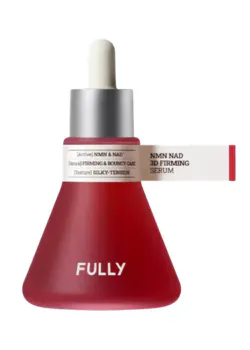
The FULLY NMN NAD 3D Firming Serum is $27 for 50mL, or roughly $0.54 per milliliter.
That's over 10x more per mL for Obagi, for a formula with fewer actives on the ingredient list. If you repurchase a serum every two months, that gap adds up fast over the course of a year.
The Bottom Line
The Obagi NU-GEN is a well-constructed, clinically validated serum built around a clear ingredient thesis. The AGE CTRL Complex is real, the clinical data is published, and the medical-grade positioning reflects genuine investment in research. For anyone in an active derm protocol or who places high value on brand-backed clinical evidence, it may well be worth the price.
What's harder to ignore is that the FULLY NMN NAD 3D Firming Serum appears to contain the same foundational NAD+ precursor complex and adds considerably more, a 13-peptide system, resveratrol, copper tripeptide-1, at a fraction of the cost. It also has its own independent clinical data showing meaningful elasticity improvements over four weeks, with results that appeared to hold one week after stopping. Based on what the ingredient lists and available studies can tell us, the FULLY formula appears to be doing more, not less.
What neither study can fully resolve is whether concentrations, stability, and manufacturing quality close the gap in real-world use. Obagi's 12-week trial across nine aging markers remains the more comprehensive body of evidence. And if you're working with a dermatologist who recommends NU-GEN specifically, that relationship has context an ingredient comparison can't replicate.
As always, patch test before committing to a new serum, introduce it gradually, and give it at least four to six weeks before drawing conclusions either way.
You can find the FULLY NMN NAD 3D Firming Serum here.